F1, Ground Floor, Sector 3, Noida
 +91 8882471048
 info@timberandply.com
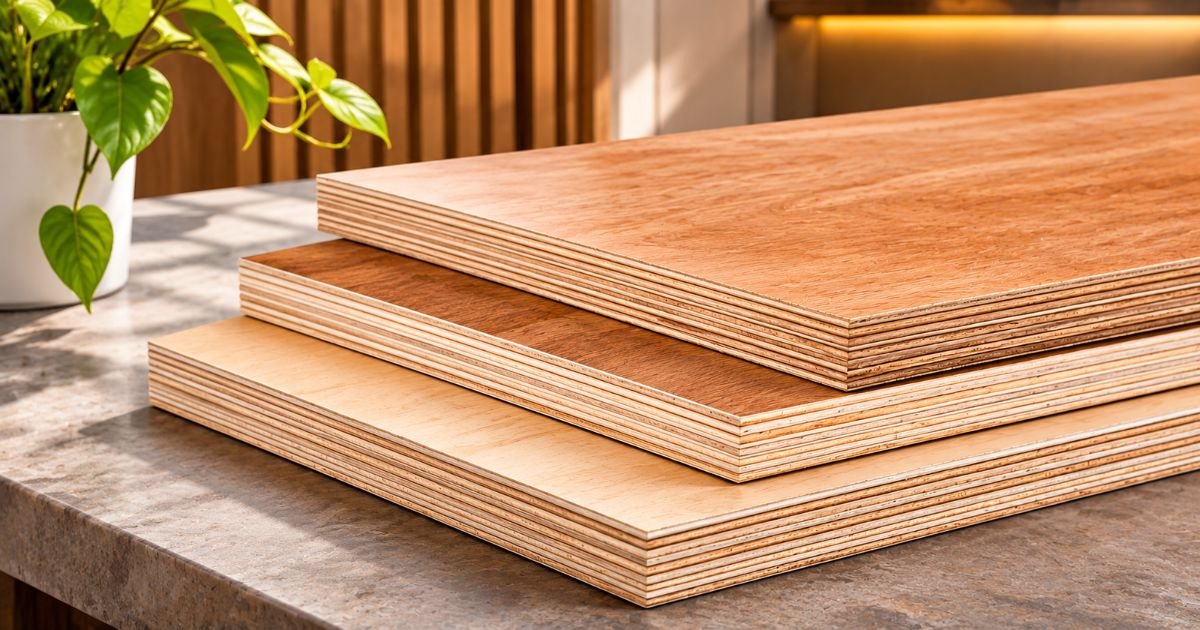
Choosing the right plywood is not simply about thickness, appearance or price. The Indian Standards (IS) number printed on a plywood sheet tells buyers which technical specification the product is intended to meet. Two important standards in the Indian plywood industry are IS 303 and IS 710.
Both are issued by the Bureau of Indian Standards (BIS), but they serve different purposes. IS 303 covers plywood for general purposes, while IS 710 covers marine plywood designed for demanding moisture-exposure conditions. Understanding this distinction helps homeowners, architects, interior designers, contractors and furniture manufacturers select suitable materials for their projects.
One important update is that IS 303:2024 includes MR, BWR and BWP grades, so it is no longer accurate to assume that every BWP-labelled plywood sheet automatically falls under IS 710. The intended application and the actual BIS certification matter.
Understanding the IS 303 Plywood Standard
IS 303 is the Indian Standard for plywood used in general-purpose applications. It specifies requirements relating to material selection, manufacturing, construction, bonding, physical properties, testing and product marking.
The standard is commonly relevant to furniture manufacturing, interior panelling, wardrobes, cabinets and other woodworking applications.
Under IS 303:2024, plywood includes different water-resistance grades:
- MR (Moisture Resistant): Intended for general interior applications where exposure to moisture is limited.
- BWR (Boiling Water Resistant): Suitable for applications requiring greater resistance to water exposure than MR plywood.
- BWP (Boiling Water Proof): A grade included in the revised IS 303 framework for specified general-purpose applications requiring higher water resistance.
IS 303 also addresses bending strength, surface quality and formaldehyde requirements. Its 2026 Amendment No. 2 revised the bending class nomenclature to Classes 10, 20, 30, 40 and 50. Buyers should therefore refer to current product documentation rather than relying entirely on older grade descriptions.
SPECIFICATION (Fourth Revision)**+1
What Is IS 710 Marine Plywood?
IS 710 is the Indian Standard specifically developed for marine plywood. Its requirements address demanding moisture conditions where ordinary interior plywood may not provide adequate performance.
IS 710:2024 is the third revision of the standard. It covers manufacturing quality, material requirements, water resistance, mechanical strength, preservative retention and testing.
Marine plywood is commonly considered for applications such as:
- Boat and ship interiors.
- Coastal construction.
- Marine furniture and fittings.
- Areas exposed to prolonged moisture.
- Specialised installations requiring higher water resistance.
The standard also includes requirements relating to formaldehyde content and mechanical properties such as tensile strength, bending strength and modulus of elasticity.
An important distinction is that IS 710 is not simply another name for waterproof plywood. It is a separate product standard with specific manufacturing and performance requirements.
SPECIFICATION (Fourth Revision)**+1
IS 710 vs IS 303 Plywood: Key Technical Differences
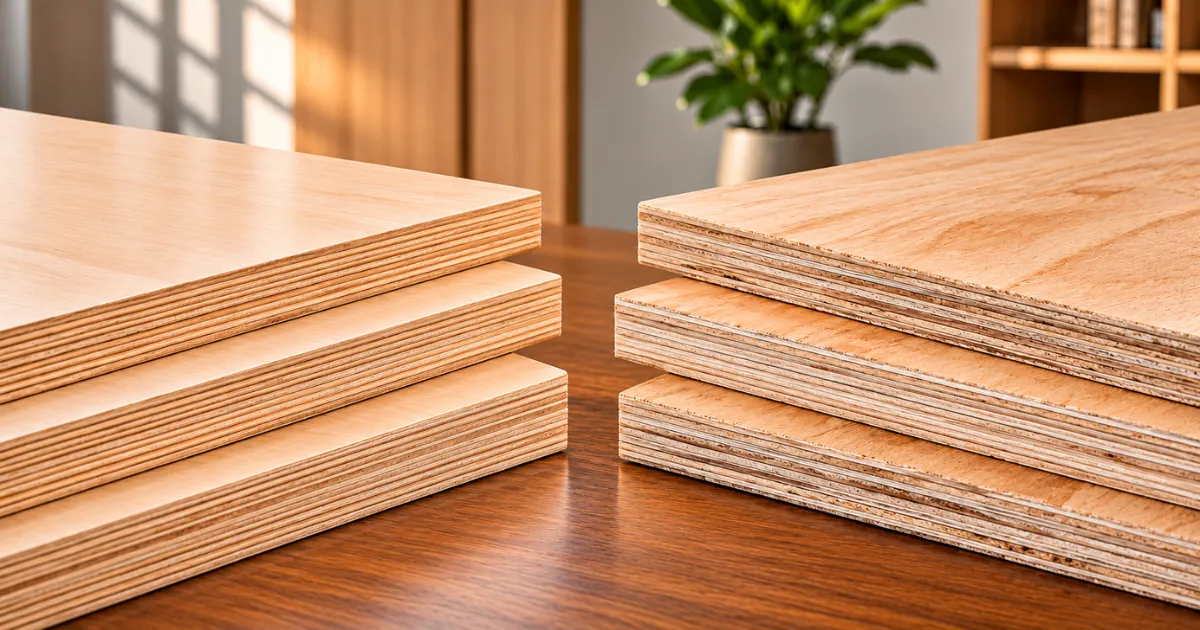
The main difference between these standards is their intended application and the performance requirements associated with each product category.
|
Comparison factor |
IS 303 Plywood |
IS 710 Plywood |
|
Standard classification |
General-purpose plywood |
Marine plywood |
|
Latest revision |
IS 303:2024 |
IS 710:2024 |
|
Water resistance |
MR, BWR and BWP grades |
Marine-grade water resistance |
|
Intended application |
Furniture and interior applications |
Marine and demanding moisture conditions |
|
Mechanical properties |
Includes bending strength requirements |
Includes bending and tensile strength requirements |
|
Preservative requirements |
According to applicable requirements |
Includes requirements relevant to marine durability |
|
Common applications |
Cabinets, wardrobes and furniture |
Marine fittings and high-moisture applications |
Both standards involve technical testing, but the requirements are not interchangeable. The correct selection depends on the environment, intended use and product certification.
Marine vs BWP Plywood: Are They the Same?
This is one of the most common areas of confusion among plywood buyers.
BWP stands for Boiling Water Proof, which describes a water-resistance grade. Marine plywood refers to plywood manufactured to meet the requirements of the IS 710 standard.
The two terms are closely related, but they should not automatically be treated as identical.
A product manufactured under IS 710 must satisfy the applicable marine plywood requirements. At the same time, IS 303:2024 also recognises a BWP grade for general-purpose plywood.
This means that a plywood sheet labelled BWP is not automatically IS 710 marine plywood.
Buyers should check the following before making a decision:
- The applicable IS standard printed on the product.
- The declared plywood grade.
- The manufacturer's BIS licence details.
- Relevant product test reports and technical specifications.
- The intended application and environmental exposure.
Understanding this distinction helps prevent buyers from selecting a product based only on its marketing description.
LIMS (Laboratory Information Management System)+2
Understanding IS 303 Plywood Grades and Their Applications
Different IS 303 plywood grades serve different interior requirements. Selecting the correct grade depends on how much moisture the material may encounter during everyday use.
|
Plywood grade |
Main characteristics |
Suitable applications |
|
MR |
Moisture-resistant bonding |
Wardrobes, bedroom furniture and dry interiors |
|
BWR |
Higher water resistance than MR |
Kitchen cabinets and furniture exposed to occasional moisture |
|
BWP |
Higher water-resistance classification |
Specified moisture-prone interior applications |
The actual performance must be verified against the applicable IS 303 requirements and manufacturer's documentation.
Another factor worth considering is plywood thickness. Common furniture applications may use different thicknesses depending on the load, panel dimensions and design. An 18 mm panel, for example, may be suitable for certain cabinet structures, while thinner panels may be selected for backs and lighter components.
Thickness alone does not establish plywood quality. Core construction, bonding, strength and manufacturing consistency also matter.
Which Plywood Is Best for Kitchen and Bathroom?
Kitchen and bathroom furniture regularly encounters humidity, splashes, cleaning water and occasional leakage. Selecting the appropriate plywood grade can help reduce the risk of swelling, delamination and premature deterioration.
For kitchen applications: BWR or BWP plywood may be considered depending on the location and expected moisture exposure. Cabinets installed near sinks, dishwashers and plumbing connections need particular attention. IS 710 marine plywood may be appropriate where prolonged moisture exposure is expected.
For bathroom applications: BWP or IS 710 marine plywood may be considered for moisture-prone furniture, depending on the installation conditions and product specifications. Proper waterproofing, edge sealing and ventilation remain important.
Buyers should remember that even marine plywood is not a substitute for waterproofing. Water entering through exposed edges, screw holes or poorly sealed joints can eventually damage the panel.
How to Check Plywood Quality Before Buying
Selecting plywood based on its printed grade alone is not sufficient. A few practical checks can help buyers make a more informed decision.
- Check BIS certification: Verify that the product carries the appropriate BIS Standard Mark and valid licence details.
- Inspect the edges: Look for visible gaps, uneven layers and signs of delamination.
- Review thickness: Confirm that the actual panel thickness matches the specified requirement.
- Examine the surface: Check for cracks, excessive patches, surface defects and uneven finishing.
- Ask for documentation: Request product specifications, relevant test reports and warranty details.
- Consider the application: Match the plywood grade to the actual moisture, load and environmental conditions.
The BIS certification should correspond to the specific product and standard being claimed. A manufacturer's general claim of quality does not replace product-specific certification.
[Contact Us for Plywood Enquiries]
Conclusion
Understanding the difference between IS 710 and IS 303 plywood helps buyers select materials according to their actual requirements rather than relying on product labels or price differences.
IS 303 is intended for general-purpose applications and offers different grades for varying moisture conditions. IS 710 is specifically developed for marine plywood applications where greater resistance to prolonged moisture exposure is required.
Shree Ram Timbers and Plywood believes that informed material selection is an important part of achieving durable furniture and interior projects. Before purchasing plywood, always evaluate the applicable BIS standard, grade, thickness, core construction and intended application.
The right plywood is not necessarily the most expensive option. It is the one that meets the technical requirements of the environment in which it will be used.