F1, Ground Floor, Sector 3, Noida
 +91 8882471048
 info@timberandply.com
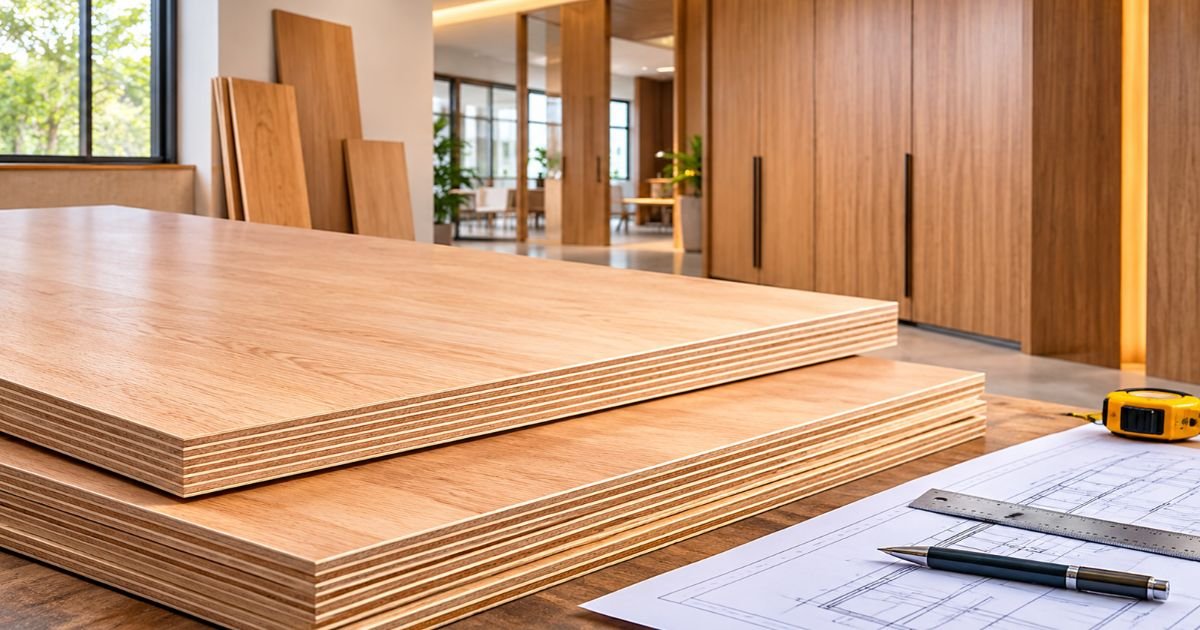
For architects, builders, contractors, and interior professionals, plywood selection is not only about thickness or grade. Sheet size can have a significant effect on design continuity, joint placement, installation time, material wastage, and overall project efficiency.
Conventional plywood sheets work well for many applications, but larger panels can be advantageous when a project involves wide furniture components, long wall panels, large shutters, partitions, doors, or architectural surfaces. This is where oversized plywood becomes particularly useful.
However, choosing a larger sheet simply because it covers more area is not enough. The panel still needs to meet the required grade, thickness, dimensional accuracy, surface quality, and performance requirements. This guide explains what professionals should evaluate before purchasing large-format plywood for a project.
What Is Oversized Plywood?
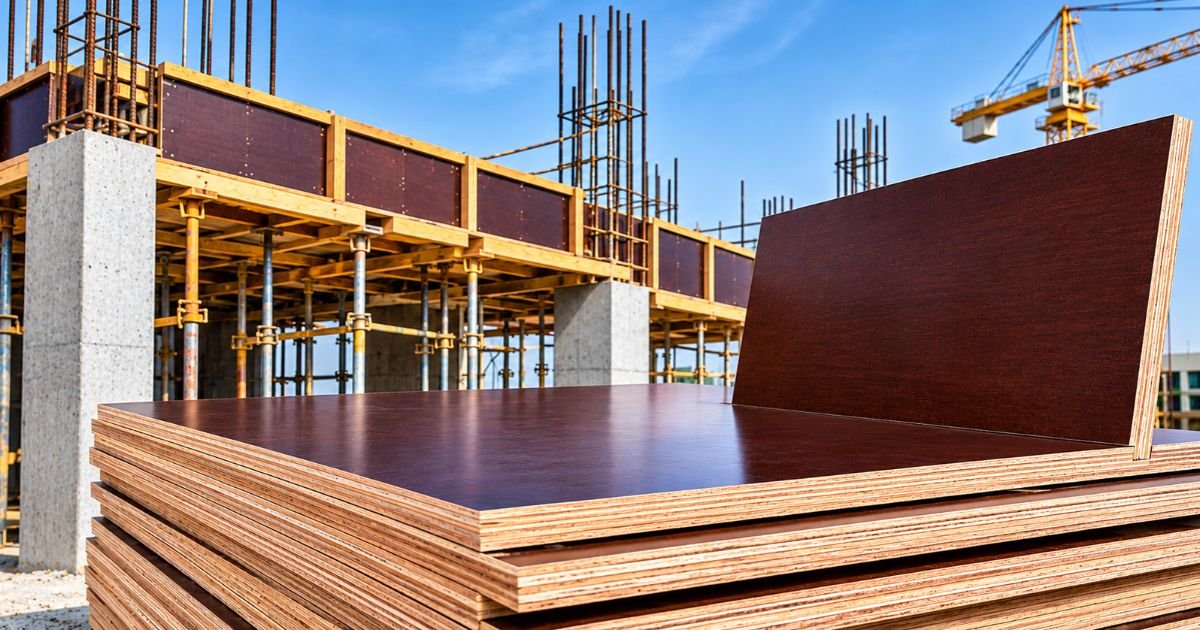
Oversized plywood refers to plywood panels manufactured in dimensions larger than conventional sheet formats commonly used in the market. One frequently specified large format is 10 ft × 4 ft, although available dimensions can vary depending on the manufacturer and product range.
The primary advantage is increased surface coverage from a single sheet. A larger panel can reduce the number of joints required when manufacturing large components.
For architects and builders, this can be useful where visual continuity and dimensional coverage are important. Fewer joints can also simplify fabrication in certain applications, although the final design must always account for structural requirements, handling, transportation, and installation conditions.
It is important not to treat “oversized” as a plywood grade. Sheet size and plywood performance are separate specifications. A large panel can still be MR, BWR, BWP, marine-grade, or another appropriate grade depending on the product and applicable standard.
Why Are Large Plywood Sheets Useful?
The biggest reason professionals consider larger sheets is efficiency.
Suppose a large furniture panel can be cut from one sheet instead of joining multiple smaller pieces. This can reduce the number of seams and simplify fabrication. Depending on the cutting plan, it may also reduce offcuts.
The benefits can include:
- Larger uninterrupted surfaces
- Fewer joints in selected applications
- Better visual continuity
- Potentially lower fabrication time
- Efficient cutting for large components
- Greater flexibility for architectural designs
- Reduced need for joining smaller panels
However, reduced wastage is not automatic. It depends on the dimensions of the finished components and the cutting pattern. A large sheet can actually create more unused material if the project dimensions are not planned properly.
Common Applications of Oversized Plywood
Large-format plywood can be useful across several construction and interior applications.
Large Furniture
Architectural furniture frequently involves wide or long components that are difficult to produce efficiently from standard-sized panels.
Examples include:
- Large wardrobes
- Full-height cabinets
- Long storage units
- Reception counters
- Conference tables
- Display units
- Large shelving components
Using a single panel where appropriate can reduce visible joints and simplify fabrication.
Wall Panelling
Large panels can be useful for feature walls and architectural wall treatments where designers want fewer visible breaks.
The exact installation method depends on the panel size, wall condition, fixing system, movement allowance, and finishing requirements.
Doors and Large Shutters
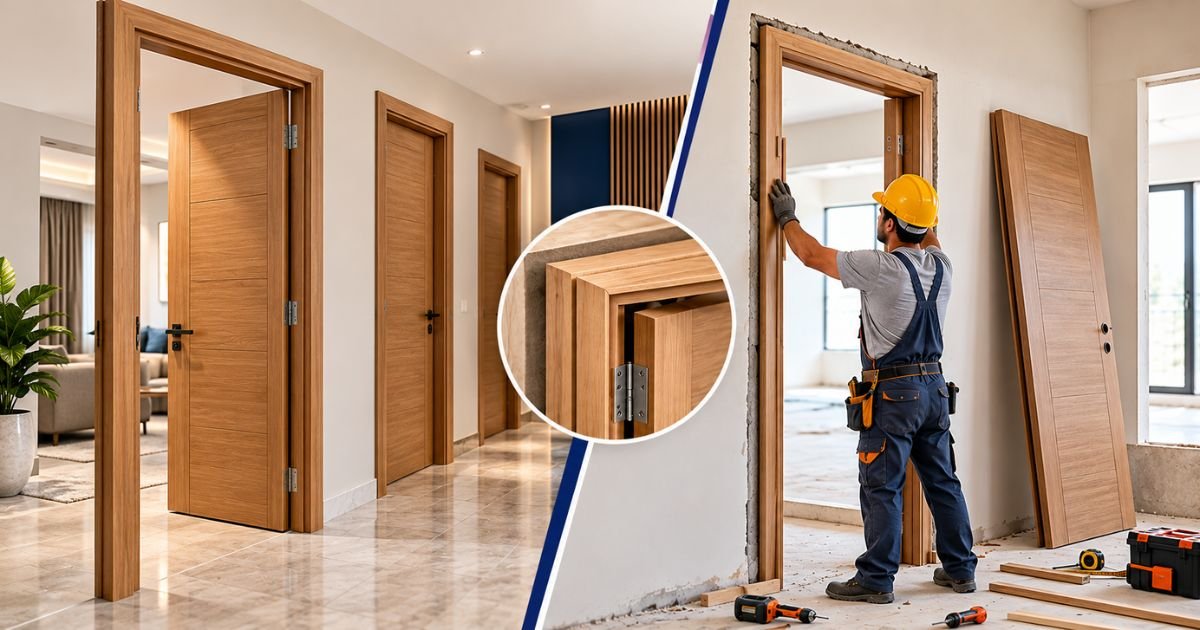
Oversized panels may also be considered for large door shutters or specialised architectural elements. However, door applications require careful consideration of weight, hardware, frame capacity, hinge arrangement, and dimensional stability.
A larger sheet is not automatically better for a door. The final shutter construction must be engineered for its intended use.
Partitions and Interior Structures
Large plywood sheets can simplify the fabrication of partitions and other interior structures where wider coverage is desirable.
The appropriate plywood grade should be selected according to the environment and application rather than sheet size alone.
What Should Architects Check Before Specifying Oversized Plywood?
Architects should treat panel size as only one part of the material specification.
A proper specification should ideally identify:
- Plywood grade
- Applicable standard
- Thickness
- Sheet dimensions
- Surface type or appearance requirements
- Core construction requirements
- Moisture resistance requirements
- Formaldehyde class where relevant
- Finishing requirements
- Manufacturer or supplier documentation
For general-purpose plywood, IS 303:2024 is the current Bureau of Indian Standards specification covering plywood for general purposes. BIS documentation identifies grades including MR, BWR and BWP, along with requirements relating to dimensions, workmanship, moisture content, water resistance, mechanical properties and other characteristics.
This distinction is important: 10 × 4 ft describes the panel size; it does not describe the plywood's performance grade.
Choosing the Correct Thickness
Thickness should be selected according to the intended application rather than simply choosing the thickest available sheet.
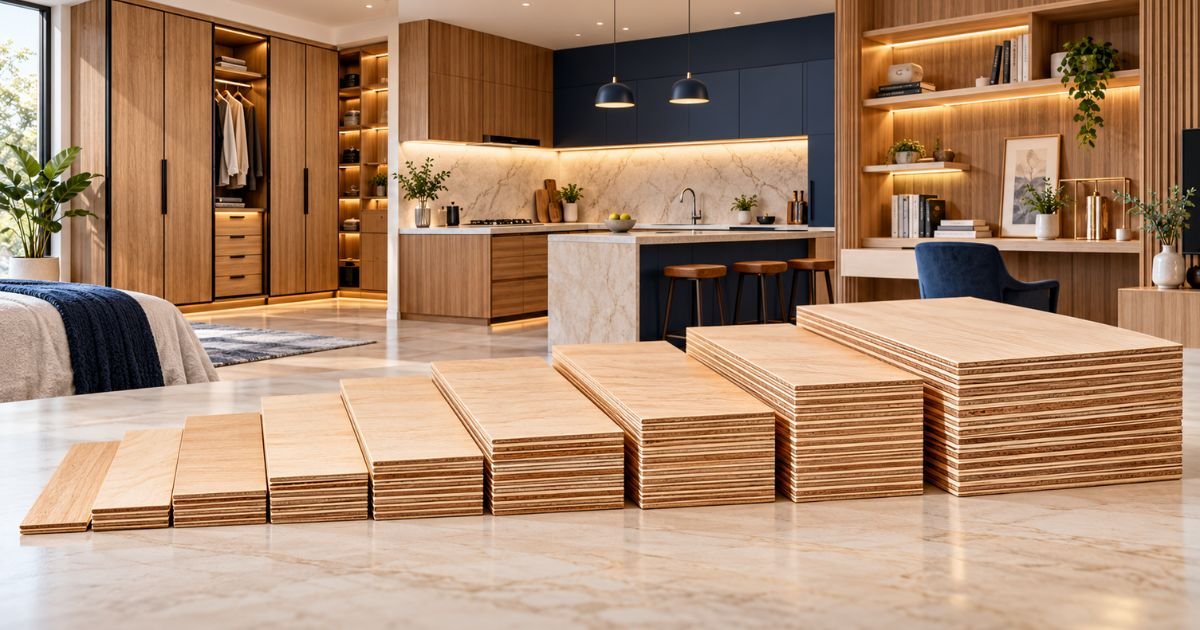
Common plywood thicknesses include 6 mm, 9 mm, 12 mm, 15 mm, 18/19 mm, 22 mm and 25 mm, depending on the product and applicable specification. BIS's current implementation material for IS 303:2024 lists 3, 4, 5, 6, 9, 12, 15, 19, 22 and 25 mm, while noting that other thicknesses may be agreed between manufacturer and purchaser.
For furniture, 12 mm, 16/18/19 mm and other thicknesses may be selected depending on the design and loading. Structural or specialised applications require project-specific engineering.
When using larger sheets, thickness also affects handling weight. A very large and thick panel can be difficult to transport and manoeuvre at the site.
Check Dimensional Accuracy
Dimensional accuracy becomes particularly important with large-format panels.
A small dimensional deviation may become more noticeable when a large sheet is being used across a wide architectural surface. Check:
- Length
- Width
- Thickness
- Squareness
- Edge straightness
- Surface flatness
- Visible manufacturing defects
BIS testing and certification information for IS 303:2024 specifically includes dimensional checks such as length, thickness, squareness and workmanship/finish.
For precision interior work, these characteristics can influence cutting accuracy and installation quality.
Don't Ignore the Plywood Grade
One of the biggest mistakes buyers make is treating large size as an indicator of higher quality.
It isn't.
You can have a large sheet with the wrong moisture-resistance grade for the application. For example, a dry interior furniture application and a moisture-prone kitchen environment may require different plywood specifications.
Choose the grade based on the actual exposure conditions.
For general-purpose plywood, the applicable BIS requirements should be verified. For marine or high-moisture applications, a different specification may be appropriate. BIS identifies IS 710:2024 as the specification for marine plywood.
Consider Handling and Transportation
This is where oversized panels create a practical challenge.
A 10 × 4 ft sheet occupies considerably more space than a conventional panel. Before ordering, consider:
- Vehicle capacity
- Loading and unloading arrangements
- Number of people required for handling
- Site access
- Stairways and lifts
- Storage area
- Risk of edge damage
- Safe lifting practices
Architects may specify a large panel on paper, but the contractor still has to move it through the actual building.
If the site has narrow corridors, small lifts, or restricted access, the theoretical efficiency of a larger sheet may disappear.
Plan the Cutting Layout Before Buying
For builders and fabricators, cutting optimization is one of the most practical considerations.
Before ordering oversized plywood sheets, prepare a cutting plan based on the final component dimensions.
A good cutting layout can help determine:
- Number of sheets required
- Expected offcuts
- Grain direction
- Joint locations
- Finishing orientation
- Edge requirements
- Whether oversized sheets actually provide a material advantage
This is especially important for expensive plywood grades. Saving a joint is useful, but not if it creates significant unusable waste.
How to Choose an Oversize Plywood Supplier
The supplier matters more when the project requires large quantities or consistent dimensions.
A professional oversize plywood supplier should be able to provide clear information about sheet dimensions, available thicknesses, plywood grade, applicable standards, product specifications, and supply consistency.
For project procurement, ask for documentation rather than relying only on verbal descriptions.
Before placing a bulk order, confirm:
- Exact sheet dimensions
- Available thicknesses
- Plywood grade
- Applicable BIS standard
- Surface quality
- Quantity availability
- Delivery requirements
- Packaging and handling
- Product documentation
For large projects, consistency between batches is particularly important because differences in thickness, surface quality, or dimensions can affect fabrication.
Why Work With an Experienced Supplier?
Oversized plywood requires more than simply finding a large sheet. The supplier needs to understand how the material will be used and what specifications the project requires.
At Shree Ram Timbers and Plywood, we supply timber and plywood products for construction, furniture, architectural and interior requirements. With 30 years of experience in the timber and plywood industry, we understand that professional buyers need material matched to the project's specifications rather than a one-size-fits-all product.
For architects and builders, this means discussing sheet size, plywood grade, thickness, application, quantity, and project logistics before finalising the material.
Final Thoughts
Oversized plywood can be a practical solution when a project requires larger uninterrupted surfaces, fewer joints, or more efficient fabrication. The 10 × 4 ft format is particularly useful for many large-scale furniture and interior applications, but it should not be selected purely because it is larger.
The correct decision requires a combination of sheet dimensions, plywood grade, thickness, dimensional accuracy, surface quality, handling requirements, cutting efficiency, and application-specific performance.
Architects should specify the complete material requirement, while builders and procurement teams should verify the actual product supplied against that specification.
If you are sourcing oversized plywood sheets, compare the technical specifications and supply capability-not just the price per sheet. A properly selected large-format panel can improve fabrication efficiency and design continuity, but only when its size and performance characteristics are appropriate for the project.