F1, Ground Floor, Sector 3, Noida
 +91 8882471048
 info@timberandply.com
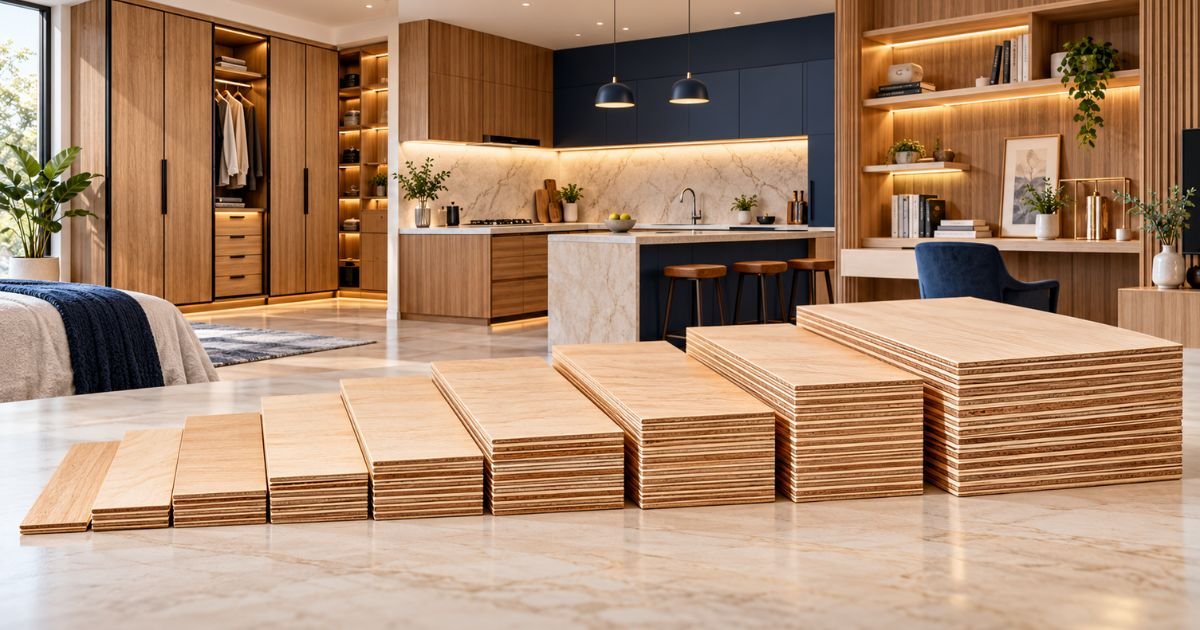
Choosing the right plywood thickness is one of the most important decisions when planning furniture or interior work. Whether you are making a wardrobe, modular kitchen, office workstation, bed or storage cabinet, the thickness of the plywood affects its stiffness, weight, material cost and suitability for the intended application.
But is 18 mm plywood always the best choice? When is 12 mm sufficient, and where can thinner sheets be used?
The answer depends on how the furniture is designed, how much load it must support, the distance between supports and the conditions in which it will be used.
In this guide, we’ll discuss common plywood thicknesses, their applications and what to consider before purchasing plywood for furniture and interior projects.
What Are the Common Plywood Thicknesses Available in India?
Plywood is available in several nominal thicknesses. Common options used in furniture and interiors include 4 mm, 6 mm, 9 mm, 12 mm, 16 mm, 18 mm, 19 mm and 25 mm, although availability varies by manufacturer and product range.
Each thickness serves a different purpose.
|
Nominal thickness |
Common applications |
Important consideration |
|
4–6 mm |
Cabinet backs, drawer bottoms and selected decorative applications |
Usually suited to applications with adequate support and limited loading |
|
9 mm |
Selected cabinet backs, light-duty panels and interior applications |
Suitability depends on support, fixing method and design. |
|
12 mm |
Lightweight furniture components, partitions and selected cabinet applications |
May need closer support than thicker boards |
|
16 mm |
Wardrobe carcasses, cabinets and furniture components |
Check loading, span and hardware requirements |
|
18–19 mm |
Wardrobes, kitchen cabinets, shelves and general furniture construction |
A common choice for many furniture applications, but not automatically suitable for every load |
|
25 mm |
Selected heavy-duty shelves, work surfaces and furniture components |
Requires suitable support and design; greater thickness also increases weight and cost. |
These are general application guidelines, not universal specifications. Always check the plywood manufacturer's recommendations and the requirements of the particular furniture design.
Which Plywood Thickness Is Best for Wardrobes?
Wardrobes contain several components, including vertical side panels, horizontal shelves, partitions, drawer assemblies and back panels. Each component may need a different thickness.
Recommended starting points for wardrobe components
- Wardrobe carcass: 16-18 mm plywood is commonly considered for side panels, top and bottom panels, and internal partitions.
- Shelves: 18-19 mm can be a practical starting point for many designs. Wider shelves or shelves carrying heavier items may require additional support or a different specification.
- Back panels: 6-9 mm may be suitable for some wardrobe designs, depending on the construction and fixing method.
- Drawer components: Thickness depends on the drawer dimensions, load, hardware and whether the component is a base, side or front.
- Wardrobe shutters: The appropriate thickness depends on shutter size, weight, hinge specifications and the selected design.
For example, a compact wardrobe with short shelves may not need the same construction as a wide wardrobe designed to hold heavy storage boxes.
Buying tip: Do not select shelf thickness based only on appearance. Shelf width, loading and the distance between supports affect how much a shelf may bend over time.
Which Plywood Thickness Is Best for Modular Kitchens?
Kitchen furniture must be selected with particular attention to moisture exposure, cleaning practices, hardware and the weight of stored items.
Common thickness considerations include:
- Cabinet carcasses: 16-18 mm plywood is frequently considered for cabinet sides, tops, bottoms and partitions.
- Shelves: 18-19 mm may suit many standard cabinet designs, subject to span and loading.
- Cabinet backs: 6-9 mm may be appropriate for selected constructions.
- Shutters: 18-19 mm is a common starting point for many designs, but the correct specification depends on shutter dimensions, finish and hardware.
The plywood grade matters just as much as its thickness. Areas exposed to frequent moisture or plumbing leaks require careful material selection and appropriate edge protection.
Marine-grade plywood, BWP/BWR plywood and MR plywood have different classifications and intended applications. Choose the grade according to the actual exposure conditions and verified product specifications, not simply because a board is thicker.
Plywood Thickness for Different Furniture and Interior Applications
|
Application |
Common thickness to consider |
What to check |
|
Wardrobe carcass |
16–18 mm |
Overall dimensions, joints and loading |
|
Wardrobe shelves |
18–19 mm |
Shelf span, weight and support |
|
Cabinet backs |
6–9 mm |
Fixing method and rigidity requirements |
|
Drawer bottoms |
4–6 mm in selected designs |
Drawer width, load and support |
|
Kitchen cabinet carcass |
16–18 mm |
Moisture exposure, grade and hardware |
|
Bed components |
18–25 mm for selected parts |
Structural design, joints and support system |
|
Office desks and workstations |
18–25 mm for selected components |
Span, loading, surface finish and support |
|
Decorative wall panelling |
6–12 mm in selected applications |
Substrate, fixing method and panel design |
|
Partitions and dividers |
12–18 mm in selected designs |
Height, framing, stability and intended use |
These ranges are indicative rather than structural design specifications. Some products and applications require different thicknesses, and a furniture designer or manufacturer should verify the final choice for load-bearing components.
5 Factors to Consider Before Choosing Plywood Thickness
1. Load and Weight
A shelf holding lightweight accessories has different requirements from one holding books, tools or heavy kitchenware.
Higher loads can increase bending and stress on joints. The thickness, board construction, support arrangement and quality of the material should all be considered together.
2. Span Between Supports
The distance between two supports is an important factor in shelf performance. A long shelf can bend more than a short shelf made from the same plywood thickness under comparable loading.
If the span is large, consider adding a support, reducing the span or selecting a suitably designed thicker component.
3. Plywood Grade and Quality
Thickness alone does not determine the performance of plywood. Core construction, veneer quality, bonding, manufacturing consistency and the declared grade also matter.
Select a grade appropriate to the intended use and verify relevant product documentation where required.
4. Moisture Exposure
For kitchens, utility areas and other moisture-prone locations, consider both the plywood grade and how the finished furniture will be protected.
Even plywood intended for moisture-exposed applications should not be treated as immune to prolonged water exposure. Sealing exposed edges, using suitable finishes and preventing leaks can help protect the finished installation.
5. Budget, Weight and Hardware
Thicker plywood generally uses more material and weighs more, which can affect handling, transportation, hardware selection and overall cost.
For doors, drawers and movable furniture components, confirm that hinges, runners and other fittings are compatible with the component dimensions and weight.
The objective is to choose the appropriate specification—not simply the thickest available sheet.
Is 18 mm Plywood Better Than 12 mm Plywood?
Not in every situation. The two thicknesses serve different purposes.
18 mm plywood is commonly considered for wardrobe carcasses, kitchen cabinets, shelves and many general furniture components because it offers greater thickness than 12 mm plywood.
12 mm plywood may be appropriate for selected lightweight furniture components, partitions, panels and designs with adequate support.
However, neither thickness guarantees a particular load capacity. The result depends on the board's construction, span, loading, joint design and installation.
Before choosing between 12 mm and 18 mm plywood, consider what the component must do and how it will be supported.
How to Check Plywood Before Buying
Before placing an order for a furniture or interior project, use this checklist:
- Confirm the nominal thickness and sheet dimensions.
- Check the intended application and appropriate plywood grade.
- Inspect the surface and edges for visible damage or delamination.
- Review product markings and applicable certification where required.
- Ask for technical documentation if the project has specific performance requirements.
- Confirm that the thickness suits the planned joints, fittings and support arrangement.
- Compare quotations for the same grade, thickness, dimensions and quantity.
For bulk orders, it is useful to agree on specifications and inspection criteria before delivery.
Choose the Right Plywood with SRPT™
At SRPT™, a brand of SHREE RAM TIMBERS AND PLYWOOD, we understand that selecting plywood is about matching the material to the job.
Our product range includes marine-grade plywood, BWP/BWR plywood, MR plywood, calibrated plywood, film-faced shuttering plywood, MDF and HDHMR, subject to availability.
Whether you are a furniture manufacturer, contractor, interior designer or homeowner, defining the required thickness, grade, dimensions and application helps make the buying process more straightforward.
- Phone: +91 8882471048 / +91 8882471905
- Address: F1, Ground Floor, Sector 3, Noida
Contact SRPT™ today for plywood options for wardrobes, modular kitchens, furniture and interior projects.
Final thickness and grade should be selected according to the design, loading, support conditions, exposure and manufacturer's recommendations.