F1, Ground Floor, Sector 3, Noida
 +91 8882471048
 info@timberandply.com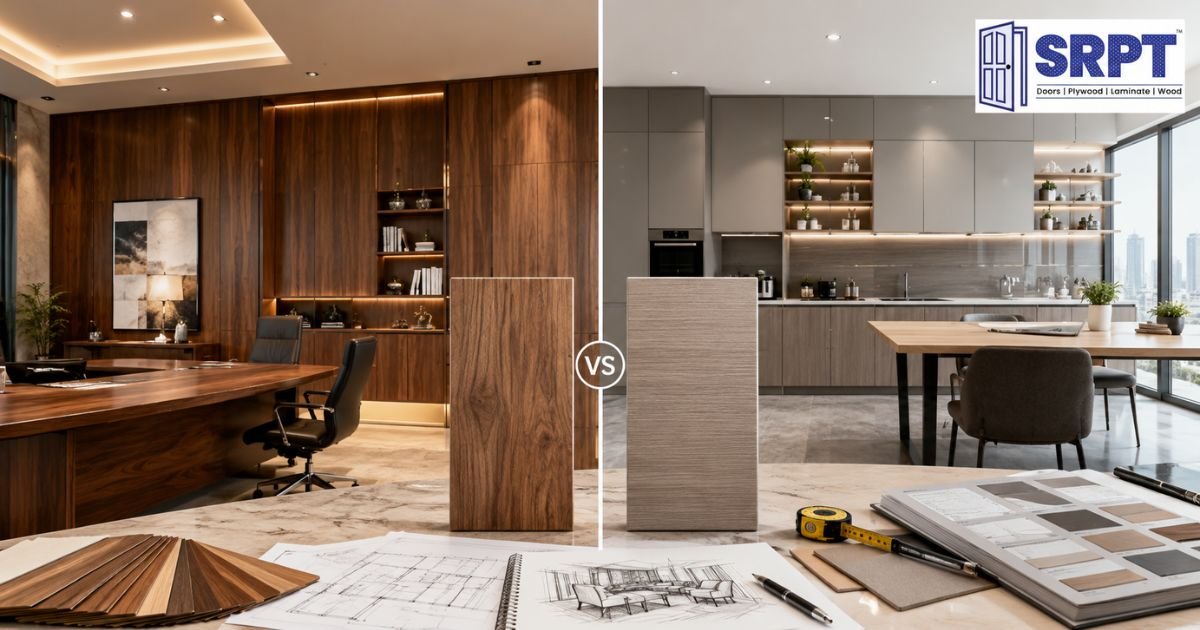
Choosing the right surface material is one of the most important decisions when designing furniture or renovating your home. Whether you are planning modular wardrobes, kitchen cabinets, office furniture, or decorative wall panels, the finish you select affects appearance, durability, maintenance, and overall cost.
When comparing Decorative Veneer vs Laminate, many homeowners assume they are similar because both are used as decorative finishes. In reality, they differ significantly in composition, performance, maintenance, and aesthetics.
In this guide, Shree Ram Timbers and Plywood explains the Difference Between Veneer and Laminate to help you make the right choice for your project.
What is Decorative Veneer?
Decorative veneer is a thin slice of natural wood that is bonded to plywood, MDF, or particle board. Since it is made from real timber, every sheet has unique grains, textures, and patterns.
Decorative Veneer Sheets are widely used in luxury interiors because they preserve the natural beauty of wood while reducing the cost compared to solid hardwood.
Advantages of Decorative Veneer
- Made from genuine wood
- Premium and elegant appearance
- Unique natural grain in every sheet
- Can be polished and refinished multiple times
- Adds value to furniture and interiors
Limitations
- Requires periodic maintenance
- More expensive than laminates
- Can be affected by moisture if not properly sealed
- Needs professional installation and polishing
What is Laminate?
Laminate is a decorative surface made by compressing multiple layers of kraft paper with decorative printed paper and resin under high pressure. The result is a durable and easy-to-maintain sheet available in hundreds of colours, textures, and finishes.
Today, Decorative Laminate Sheets are one of the most popular choices for residential and commercial interiors because they offer excellent durability at an affordable price.
Advantages of Laminate
- Budget-friendly
- Scratch-resistant
- Moisture-resistant options available
- Easy to clean
- Large variety of colours and designs
- Low maintenance
Limitations
- Cannot be refinished
- Printed patterns do not replicate natural wood perfectly
- Damaged sheets usually need replacement
Difference Between Veneer and Laminate
Understanding the Difference Between Veneer and Laminate helps you choose the material that matches your budget and design goals.
|
Feature |
Decorative Veneer |
Laminate |
|
Material |
Natural wood |
Synthetic decorative sheet |
|
Appearance |
Real wood grain |
Printed patterns and textures |
|
Cost |
Higher |
More economical |
|
Durability |
Good with maintenance |
Excellent |
|
Scratch Resistance |
Moderate |
High |
|
Maintenance |
Requires polishing |
Easy cleaning |
|
Repair |
Can be refinished |
Usually replaced if damaged |
|
Installation |
Skilled workmanship required |
Easier installation |
Veneer vs Laminate for Furniture
One of the most common questions is Veneer vs Laminate for Furniture.
The answer depends on how the furniture will be used.
Choose veneer if you want:
- Premium living room furniture
- Luxury office interiors
- Executive cabins
- Designer wardrobes
- High-end decorative panels
Choose laminate if you need:
- Children's furniture
- Office workstations
- Rental properties
- Daily-use wardrobes
- Budget-friendly furniture
For furniture that experiences heavy daily use, laminates generally require less maintenance while maintaining their appearance for years.
Veneer vs Laminate for Kitchen Cabinets
The comparison between Veneer vs Laminate for Kitchen Cabinets is especially important because kitchens experience heat, moisture, grease, and frequent cleaning.
Veneer for Kitchen Cabinets
Suitable when:
- Premium appearance is the priority
- Proper sealing is applied
- Regular maintenance is acceptable
Laminate for Kitchen Cabinets
Suitable when:
- Easy maintenance is required
- High moisture resistance is needed
- Long-lasting performance is expected
- Budget matters
For most modern modular kitchens, laminates remain the preferred option because of their durability and ease of cleaning.
Laminate vs Wood Veneer
Many customers also compare Laminate vs Wood Veneer when selecting materials for wardrobes and office furniture.
Wood veneer provides authenticity because every sheet comes from real timber. Natural grain variations create an elegant finish that cannot be exactly replicated.
Laminate, however, offers greater consistency. Every sheet looks identical, making it easier to achieve a uniform appearance across large projects.
If luxury and natural aesthetics are your priorities, wood veneer is an excellent choice. If durability and affordability matter more, laminate is often the better solution.
Which is Better Veneer or Laminate?
A common question homeowners ask is, Which is Better Veneer or Laminate?
There is no universal answer because each material serves different purposes.
Choose decorative veneer if you want:
- Natural wood aesthetics
- Luxury interiors
- Premium furniture
- Long-term refinishing options
Choose laminate if you want:
- Better scratch resistance
- Affordable pricing
- Easy maintenance
- Modern colour options
- High durability
Your final decision should depend on your design preferences, maintenance expectations, and project budget.
Best Material for Furniture Finish
When selecting the Best Material for Furniture Finish, consider these factors before making your purchase:
Budget
Laminates are generally more affordable than veneers.
Appearance
Veneers offer unmatched natural beauty because they are made from real wood.
Durability
High-pressure laminates provide better resistance against scratches, stains, and daily wear.
Maintenance
Laminates require minimal maintenance, while veneers benefit from periodic polishing.
Application
Luxury homes often prefer veneer for statement furniture, whereas offices, kitchens, and commercial spaces commonly use laminates for their durability.
Expert Tips Before Buying
Before selecting either material, keep these practical recommendations in mind:
- Purchase products from trusted suppliers.
- Check sheet thickness and quality standards.
- Match the finish with the overall interior design.
- Consider future maintenance costs.
- Use experienced installers for the best results.
- Choose moisture-resistant products for kitchens and bathrooms.
A quality installation can significantly improve the lifespan and appearance of both veneer and laminate surfaces.
Final Thoughts
The comparison between Decorative Veneer vs Laminate ultimately comes down to your priorities.
If you appreciate the elegance and individuality of natural wood, decorative veneer is an excellent investment. On the other hand, if you need a durable, low-maintenance, and cost-effective solution, laminates are an ideal choice for modern homes and commercial interiors.
At Shree Ram Timbers and Plywood, we offer a wide selection of premium Decorative Veneer Sheets and Decorative Laminate Sheets to suit every style and budget. Our team can help you choose the right material based on your project requirements, ensuring long-lasting performance and beautiful interiors.