F1, Ground Floor, Sector 3, Noida
 +91 8882471048
 info@timberandply.com
Whether you're constructing a residential building, commercial complex, bridge, or infrastructure project, choosing the best shuttering plywood plays a major role in achieving strong, smooth, and durable concrete structures. High-quality shuttering plywood not only improves the finish of concrete but also reduces project costs by allowing multiple reuses and minimizing material wastage.
With several grades, thicknesses, and brands available in the market, selecting the right plywood can be confusing. This guide explains everything you need to know about choosing the right shuttering plywood for construction, including technical specifications, quality standards, thickness, pricing, and buying tips.
What Is Shuttering Plywood?
Shuttering plywood is a specially engineered plywood designed to support wet concrete until it gains sufficient strength. Unlike standard plywood, it is manufactured using high-density hardwood veneers bonded with waterproof phenolic resin, making it capable of withstanding heavy loads, moisture, and repeated use.
Most premium products are coated with a phenolic film, creating film faced shuttering plywood that provides a smooth concrete finish while preventing cement from sticking to the surface.
Because of its strength and durability, construction shuttering plywood is widely used for columns, slabs, beams, walls, foundations, flyovers, and industrial structures.
Why Choosing the Right Shuttering Plywood Matters
Using poor-quality plywood can result in surface defects, increased labor costs, frequent replacements, and project delays.
Choosing the best shuttering plywood offers several advantages:
- Higher load-bearing capacity
- Better concrete surface finish
- More reuse cycles
- Reduced maintenance costs
- Improved dimensional stability
- Excellent water and weather resistance
- Lower overall construction cost
For contractors and builders, investing in quality plywood usually delivers better long-term value than selecting the cheapest option.
Factors to Consider When Choosing Shuttering Plywood
1. Check IS 4990 Certification
The first thing to verify is whether the plywood complies with IS 4990 shuttering plywood standards.
IS 4990 specifies the quality requirements for shuttering plywood used in concrete formwork, including:
- Bonding strength
- Moisture resistance
- Load-bearing capability
- Dimensional accuracy
- Durability
Using certified plywood ensures consistent performance and greater reliability on construction sites.
2. Choose the Right Thickness
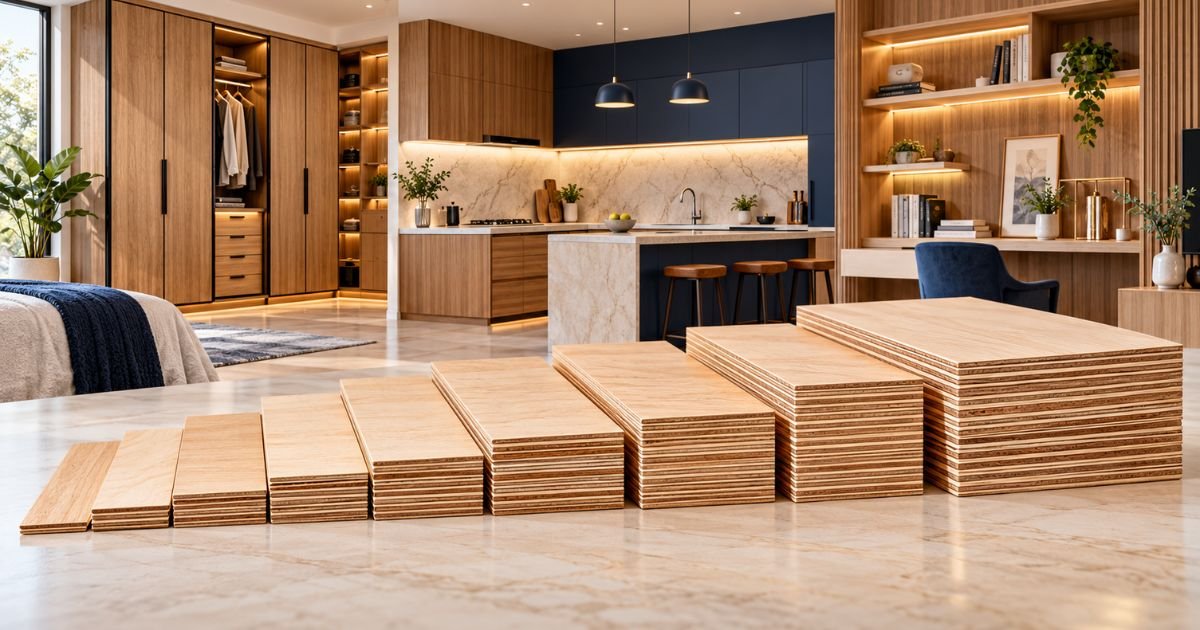
Selecting the correct shuttering plywood thickness depends on the type of project and expected load.
Common thickness options include:
|
Thickness |
Typical Applications |
|
12 mm |
Light-duty formwork |
|
15 mm |
Residential projects |
|
18 mm |
Commercial buildings |
|
21 mm |
Heavy-duty infrastructure |
|
25 mm |
Large industrial applications |
Thicker plywood generally provides better strength and reduced deflection, although proper support spacing is equally important.
3. Select Film Faced Shuttering Plywood
Whenever possible, choose film faced shuttering plywood for better durability and concrete finishing.
The phenolic film provides several benefits:
- Smooth concrete surface
- Reduced water absorption
- Easy demoulding
- Longer service life
- Better resistance to abrasion
- Easier cleaning after each use
Premium film-faced boards are particularly beneficial for projects requiring multiple reuse cycles.
4. Evaluate Core Material
The internal core significantly affects plywood performance.
High-quality shuttering plywood for construction should contain:
- Hardwood core veneers
- Uniform layer construction
- No internal gaps
- High-density composition
- Strong adhesive bonding
Void-free construction improves structural integrity and reduces the risk of cracking during heavy concrete pours.
5. Water Resistance Is Essential
Construction environments frequently expose plywood to water, cement slurry, and changing weather conditions.
Choose plywood manufactured with waterproof phenolic resin that offers:
- Boiling water resistance
- Moisture resistance
- Delamination protection
- Long service life
Water-resistant plywood maintains its strength even after repeated exposure to wet concrete.
6. Consider the Number of Reuses
One of the biggest factors affecting project cost is the number of times plywood can be reused.
The best plywood for concrete formwork often provides significantly more reuse cycles than low-grade alternatives when handled and maintained correctly.
To maximize reuse:
- Apply shuttering oil before every pour.
- Clean immediately after removing the formwork.
- Store sheets flat in a dry location.
- Avoid dropping or dragging panels.
- Repair damaged edges promptly.
Proper maintenance extends the usable life of the plywood and improves project economics.
Understanding Shuttering Plywood Price
Many buyers focus only on shuttering plywood price, but the lowest purchase price does not always result in the lowest overall cost.
The actual value depends on factors such as:
- Thickness
- Density
- Core material
- Resin quality
- Film coating
- Number of reuse cycles
- IS certification
A slightly higher-priced plywood that lasts for many more uses often proves more economical over the duration of a construction project.
Common Applications of Construction Shuttering Plywood
Quality construction shuttering plywood is suitable for numerous applications, including:
- Building foundations
- Concrete slabs
- Beams
- Columns
- Retaining walls
- Flyovers
- Bridges
- Industrial flooring
- Water tanks
- Infrastructure projects
Its versatility makes it an essential material for contractors and project developers.
Mistakes to Avoid When Buying Shuttering Plywood
Many buyers unknowingly compromise quality by making avoidable mistakes.
Avoid the following:
- Purchasing solely based on price
- Ignoring IS certification
- Choosing incorrect thickness
- Buying non-film-faced plywood for repeated use
- Overlooking edge sealing quality
- Not checking veneer density
- Improper storage after use
Paying attention to these details helps improve construction quality while reducing long-term costs.
Why Buy from a Trusted Supplier?
Reliable suppliers ensure consistent product quality, proper documentation, and technical guidance.
At Shree Ram Timbers and Plywood, we supply premium-quality shuttering plywood suitable for residential, commercial, and infrastructure projects. Our products are sourced to meet demanding construction requirements and are selected for their durability, strength, dimensional stability, and dependable performance under challenging site conditions.
Whether you need plywood for a small residential project or a large commercial development, choosing the right material from a trusted supplier helps improve productivity and reduce lifecycle costs.
Conclusion
Selecting the best shuttering plywood involves much more than comparing prices. Builders should evaluate certification, thickness, film coating, core quality, water resistance, and expected reuse cycles before making a purchase.
Whether you require shuttering plywood for construction, film faced shuttering plywood, or the best plywood for concrete formwork, investing in certified, high-quality materials ensures better structural performance, smoother concrete finishes, and long-term savings.
If you're looking for dependable construction shuttering plywood that meets industry standards, Shree Ram Timbers and Plywood offers quality solutions designed to support demanding construction projects with confidence.